
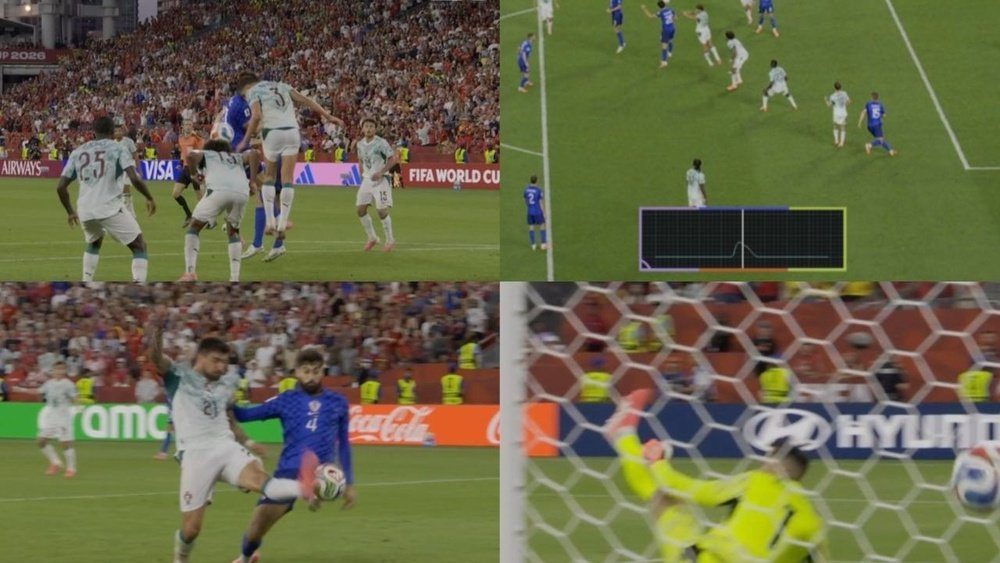
Portugal edged past Croatia amidst high-stakes controversy. Deep into the 115th minute, the ‘Checkered Ones’ thought they had snatched a last-gasp equaliser to force extra time, only for the goal to be chalked off for offside against Mario Pasalic—a marginal call only confirmed by the ball’s internal chip technology.
The atmosphere was one of pure drama: Portugal held a slender lead over Croatia in the Round of 32 of the 2026 World Cup, as regulation time reached a grueling conclusion. The referee signaled ten minutes of stoppage time following a series of VAR reviews, disallowed goals, and fouls, turning the final stages into an endurance test.
In the 115th minute, defender Josko Gvardiol, a vital asset for Zlatko Dalic, steered the ball home for what appeared to be the equaliser, only for the strike to be ruled out. The decision rested on an offside call against Mario Pasalic, who had teed up the Manchester City defender inside the six-yard box. Crucially, the ball had reached the number 15 after a header from Renato Veiga, which initially suggested an onside position.
Following a breathless wait, the VOR room summoned the referee to the pitchside monitor. The official broadcast then revealed the high-tech evidence: a graphic generated by the microchip embedded within the ball, capable of detecting the slightest vibration of contact.
A definitive spike in the data confirmed that the ‘Checkered Ones’ number 20, Igor Matanovic, had got a faint touch to the cross coming in from the right. Due to that touch, Renato Veiga’s intervention was deemed a mere deflection rather than a deliberate play that would ‘reset’ the offside phase. Consequently, the officials stood by the original decision, maintaining the 2-1 scoreline for Portugal.